

My grandma loves to tell me how similar I am to my great–grandpa, Clarence David Bullock. I love history; he loved history. I collect National Geographic; he was a habitual reader of the magazine himself. When she found boxes of his marine uniforms in her garage, she brought them to our house. On top of our similar interests, my great–grandpa was a similar height and size to me, and she had me try on his uniforms.
“He would be so proud of you,” she said. As she took photos, she called me “marine.”
Before I embarked on this project, I knew very little about the man I was apparently so similar to. I hardly even knew his name; everyone in the family just called him “Popo.” I knew he liked motorcycles, and in most of the pictures I had seen of him he was riding one of his Harley Davidson motorcycles. Notably, I knew he had fought in the Battle of Okinawa in 1945. I never met him, however. He died in 2003, six years before I was born.
In a stroke of luck, I was able to hear his story straight from the source. My parents found tapes containing hours and hours of interviews my mother, Tara Miner, had done with my great grandfather in the mid ‘90s. My mom was very close with Clarence, and he died just before her 29th birthday.
“I just thought his stories were interesting to listen to,” she said. “I wrote a creative writing paper once about him. I didn’t know anyone else like him. It felt like interviewing a storyteller. I thought it might be valuable someday to have it recorded.”
xxx
Clarence David Bullock was born in 1918 to an English father and a Finnish mother in upper Michigan. His father was a miner in West Virginia until work dried up, and the family moved back to upper Michigan. The Upper Peninsula has a large Finnish population, and Clarence grew up surrounded by its culture and traditions. He was proud of his heritage, and spoke Finnish fluently.
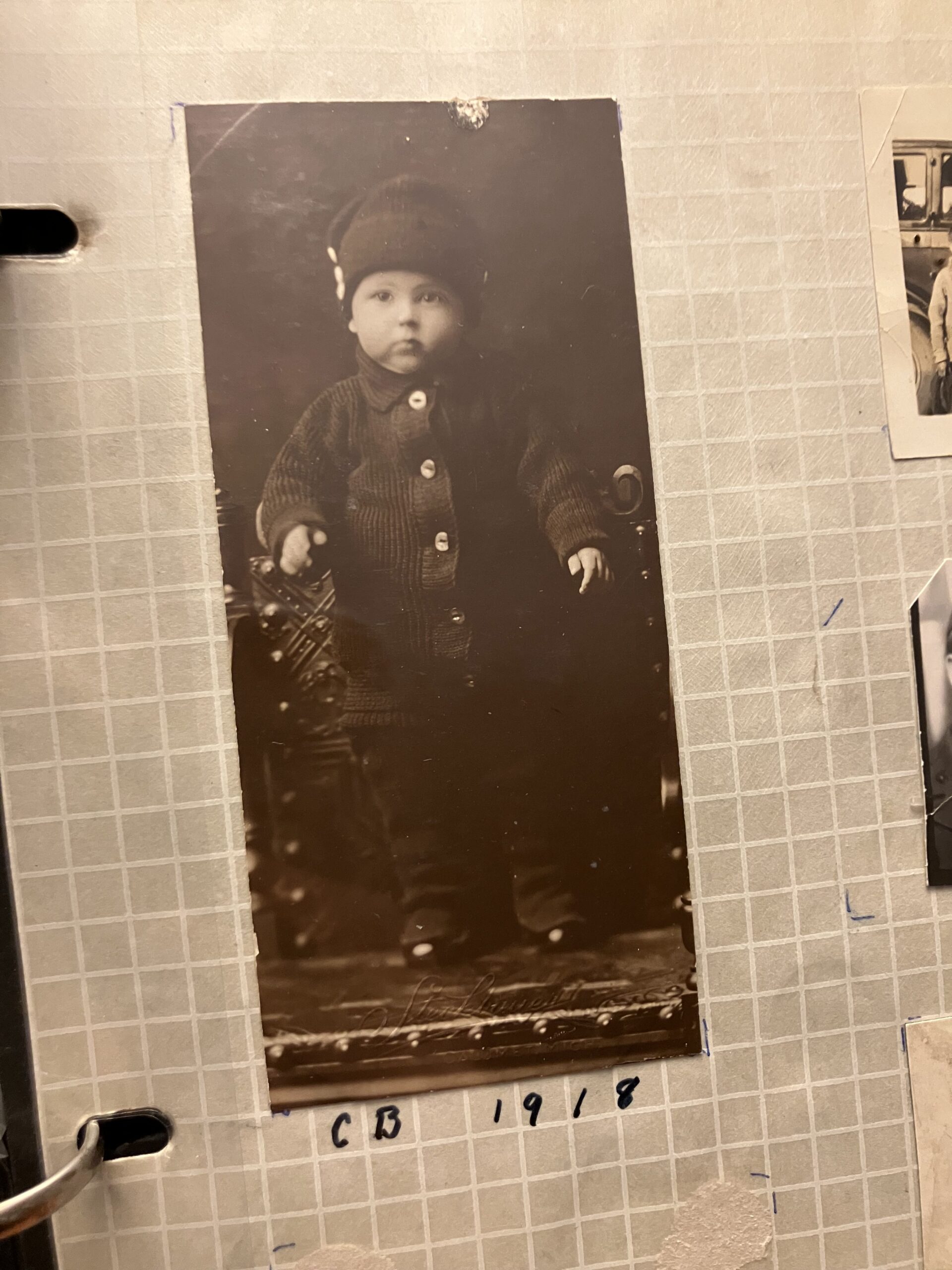
Clarence grew up in a period of turmoil for the United States. “I was 11 when the Great Depression hit,” he said on the recording. “I grew up in it.” He left school to start working, and at 17 joined the Civilian Conservation Corps (CCC), Franklin D. Roosevelt’s attempt to create jobs to stimulate the economy during the Depression.
After his stint in the CCC, Clarence moved to Detroit and got a job at Nabisco. While living there, he met Signe Mikkola, my great–grandmother. Both ardent bikers, their dates often consisted of motorcycle trips in the country. They got married and had two children, Dick and Joey.
Clarence continued to work after the outbreak of WWII, but in 1944 the nation came calling and caught up with him. “I was drafted into the Navy like a damn fool,” he said. “We were being sworn in and they said they wanted six volunteers for the Marines.” He joined the Sixth Division, nicknamed “the Striking Sixth.” The division only saw combat on Okinawa, and was the only marine division to be both formed and disbanded overseas.
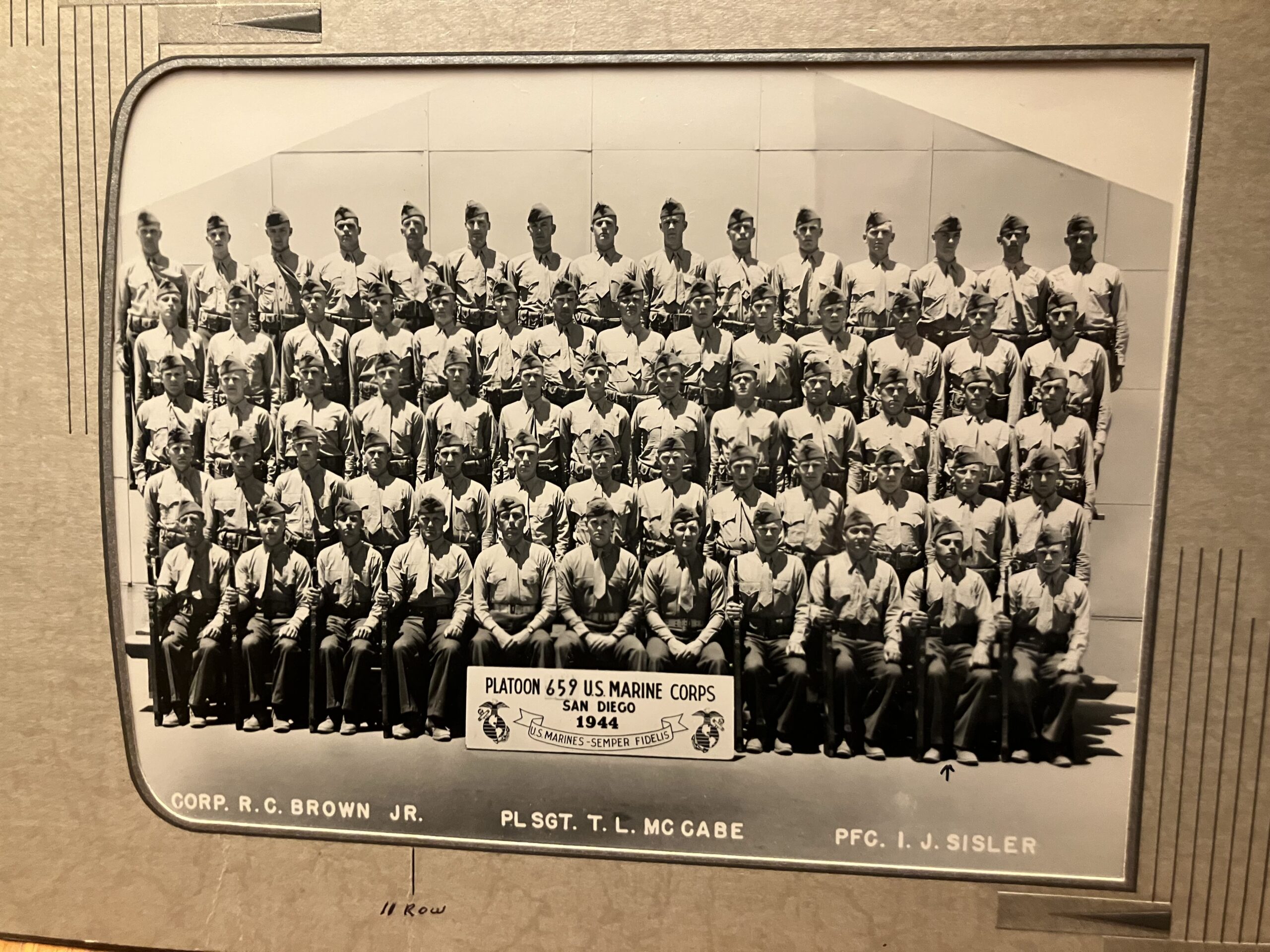
Clarence was shipped out to Guadalcanal, leaving Signe and their two sons behind in Michigan. “[When I left], Joey was two weeks old and Dick was 2 years old,” he said. “When I came back, Joey, I didn’t know him at all.”
The Battle of Okinawa was an amphibious invasion of the island by American forces, which lasted from April to June of 1945. According to historian Joseph Wheelan, author of Bloody Okinawa, the strategic objective was to use Okinawa as a jumping off point for the invasion of the Japanese mainland.
“Okinawa was important to the Allies because it was the first Japanese home island to be invaded, and it lay just 350 miles from mainland Japan,” said Wheelan. “Previously, long-range B-29s were the only planes with the fuel capacity to make the 3,000-mile round trip from the Mariana Islands to Japan. From Okinawa, medium-range bombers could strike Japan.”
By 1945, America had made significant advances into Japanese territories in the Pacific. It was increasingly evident that Japan was no longer able to win the war. They had lost much of their territories in the Pacific, and the U.S. had far more troops, aircraft and battleships.
“The Japanese fought a purely defensive land battle, along the lines of their earlier defenses of Peleliu and Iwo Jima,” said Wheelan. “The Japanese knew from the battle’s beginning that they stood no chance of prevailing against the more than 400,000 American soldiers that landed. The U.S. also controlled the air and sea, forestalling the possibility of reinforcement.”
Throughout the war, the Japanese military employed suicide attacks such as kaiten manned torpedoes and kamikaze plane attacks. These attacks were utilized with increasing frequency towards the end of the war, as it became clear to military officials that Japan was losing.
“The air battle was especially notable because Japan flew thousands of planes against the American ships of the Third and Fifth Fleets off Okinawa, hoping to sink their aircraft carriers,” said Wheelan. “Instead, the picket destroyers absorbed the brunt of the attacks. Thirty-six U.S. ships were sunk, two-thirds of them by kamikazes.”
The invasion was projected to have an astronomical death toll for both sides, due to the ferocity of the Japanese defense. However, the plan was scrapped when President Harry Truman decided to drop atomic bombs on Hiroshima and Nagasaki, leading to Japan’s surrender.
My great–grandpa remembered the relief his fellow servicemen felt when the war ended. “I was on Guam when they dropped the bombs,” Clarence said. “Everyone was happy because it was over.”
xxx
During the three–month battle on Okinawa, Clarence was stationed in a foxhole, protecting medic tents. While he was not in the center of the fighting, his small group frequently came under attack. They were often charged by lone soldiers attempting suicide attacks.
“There were caves [near the foxhole],” said Clarence. “One night we saw a son of a bitch come out of the caves running through the high grass,” he said. “We mowed him down. He was a navy man, a Chief navy officer, not a soldier. Later on I stripped what he had on him, [there were] pictures of his two sisters”
My great–grandfather, at least by the time of my mom’s interview, was blunt when talking about hard things, with a biting sense of humor. During the battle, his friend Brindle had his hand blown off by a grenade. Recounting the incident on the tapes, he cracked a joke about Brindle winning the war “single handedly.”
Looking through Clarence’s scrapbooks, I found the photos he mentioned. The soldier looks incredibly young, as do his sisters. They are unsmiling in all of the photos. On what appears to be an identification card for the soldier, Clarence had written a short inscription: “Threw a grenade into our hole one night, got Brindle in one hand. Bryant and I got him.”
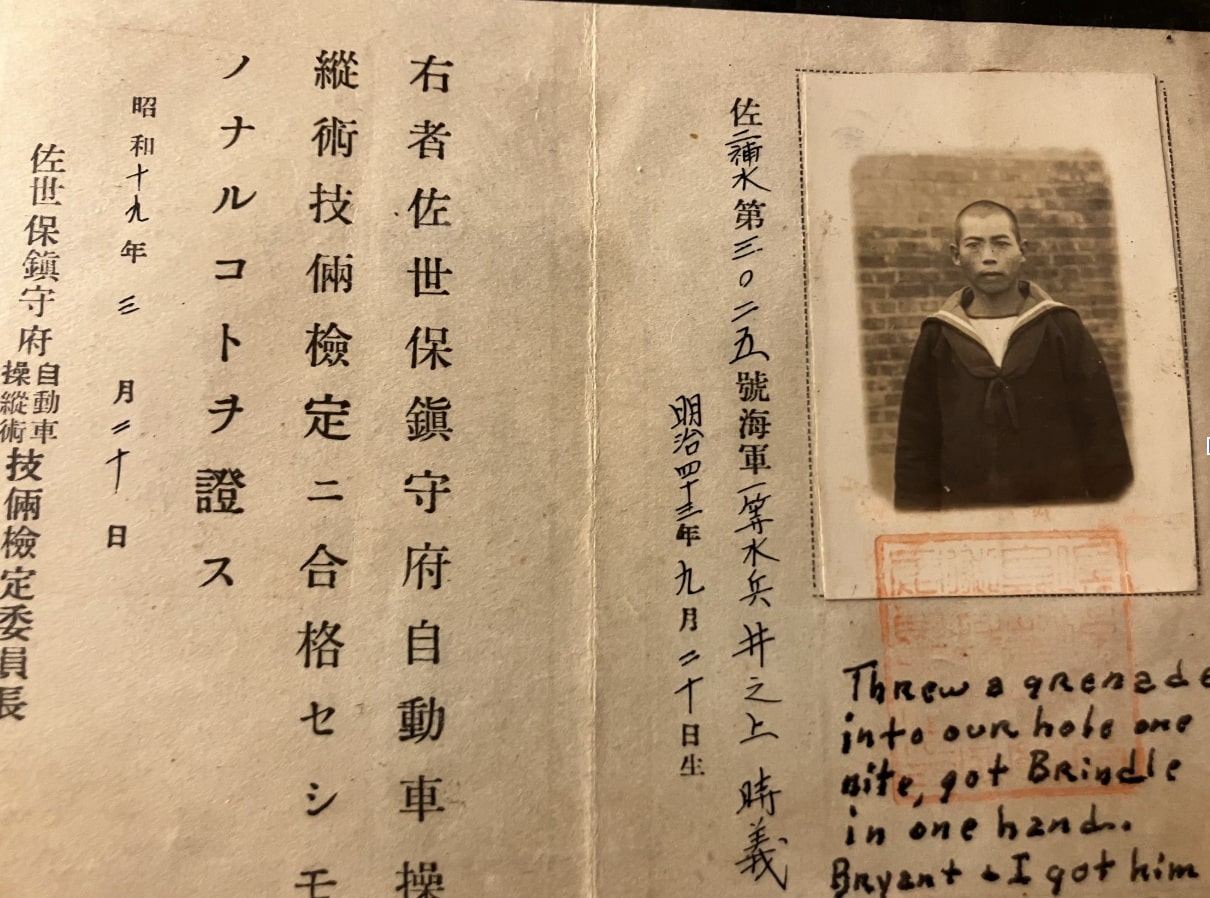
“We had a light dirty machine gun, Bryant [a fellow marine] and I were on watch and this guy made a dive outta that cave, he knocked him down in the grass and he got left moaning so I shot him up with a Thompson,” Clarence said. “Rather than hear the poor bastard moan, you kill him. That’s pretty vivid in my memory today, what I did there that night.
I don’t think there is any way to know why my great grandpa did what he did during the battle, and how he moved on from it to be the loving father and grandfather my relatives knew. I am sure that the atmosphere of war was a factor, but I think it’s deeper than just him doing bad things because everyone was doing bad things. War is far too complicated morally and ideologically to be reduced down to blanket statements, even if some things done during it are unquestionably bad. In the end, I think he was the only person who could understand his personal experience of it.”
112,000 soldiers died in the battle: 12,000 Americans, 100,000 Japanese as well as 100,000 civilians. Towards the end of the battle, the Japanese defense was desperate, and many Okinawan civilians were ordered to commit suicide by the Japanese military, detonating themselves and their families with grenades. The military had told them that capture by the Americans would be worse than death.
“Many civilians died in what was described as ‘a typhoon of steel’ when they became intermingled with the retreating Japanese,” said Wheelan. “Others, used as human shields by the Japanese, died in firefights, or while huddled in caves. More civilians died on Okinawa than in any other single island battle during the Pacific war.”
xxx
As we went through my great–grandfather’s scrapbooks, my grandma, one of the six other children Clarence had after the war, showed me a clipping of a fascinating news article. During the war, Clarence found the scrapbook of a Japanese pilot. He held onto it, and when he met a soldier at his church with a Japanese wife, he passed on the book, hopeful that they could return it to the soldier’s family.
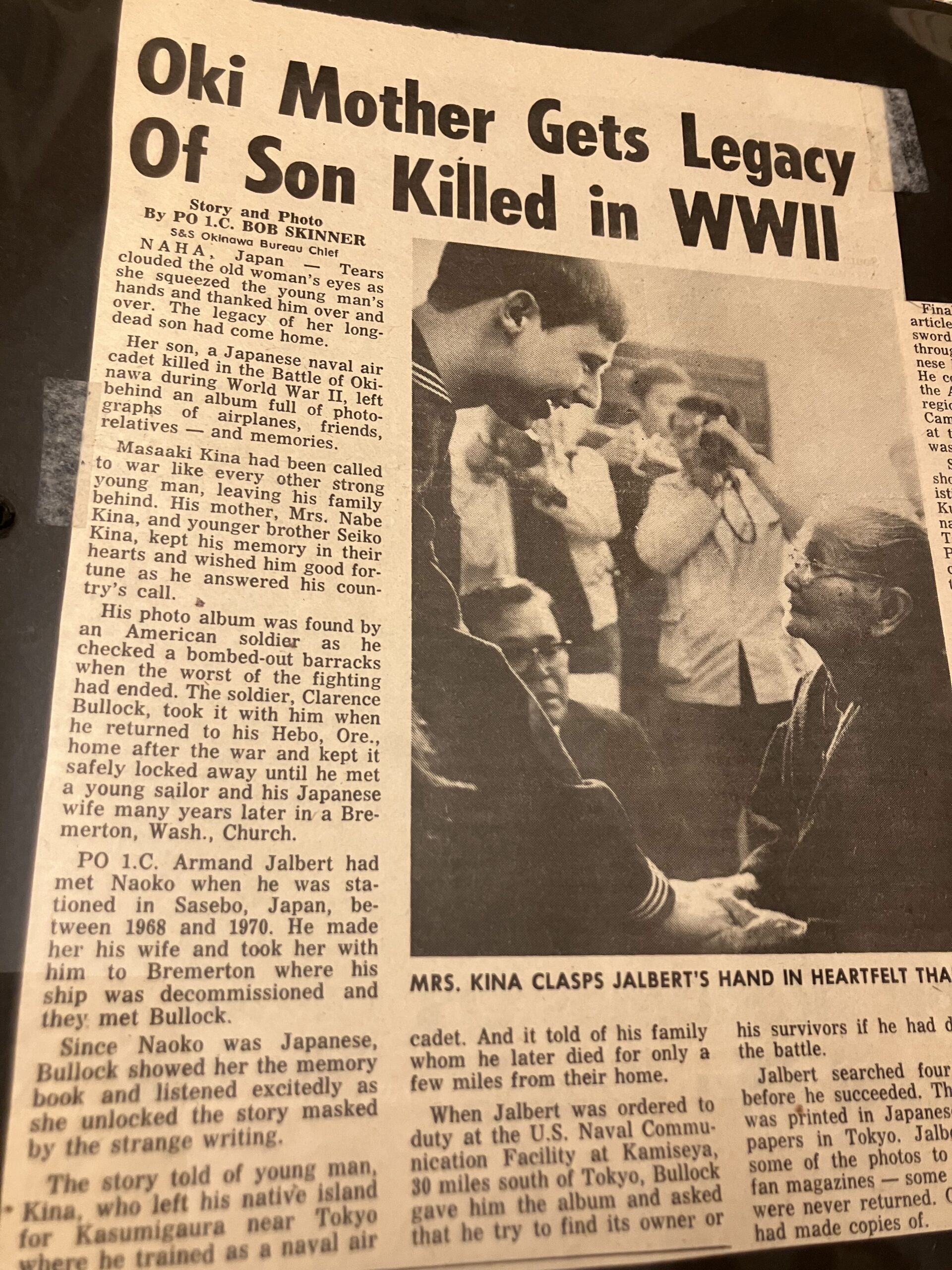
The soldier and his wife succeeded, identifying the scrapbook owner’s mother. It was returned to her, an event that was written about in newspapers and broadcasted on Japanese TV. My great grandfather kept photocopies of the photos in his own scrapbook. The images are eerie. The young pilot posing with his plane. A squadron of planes flying above a city. A man in traditional Japanese dress, holding a sword.
Clarence’s own scrapbook of the war features photos, some of them annotated. Many are of him and his fellow Sixth division Marines, Brindle in particular. There are pictures of bombed out buildings and the aforementioned caves where Japanese soldiers hid. There is a picture of a 17–year–old American soldier, and a 14–year–old Japanese boy shot in the leg. One particularly unsettling series of photos shows a soldier, presumably Japanese, being buried in a mass grave.
I showed many of the items to my Japanese teacher, Kumiko Sammler, in our weekly tutoring sessions. A Japanese abacus was of particular interest. By reading the inscription carved into the wood, she was able to identify that it had belonged to the city hall of Nago, Okinawa. Based on the pattern of beads she determined a loose age range: the Taisho era (1912–1926), at the latest and the Edo era, (1603–1868), at the earliest.
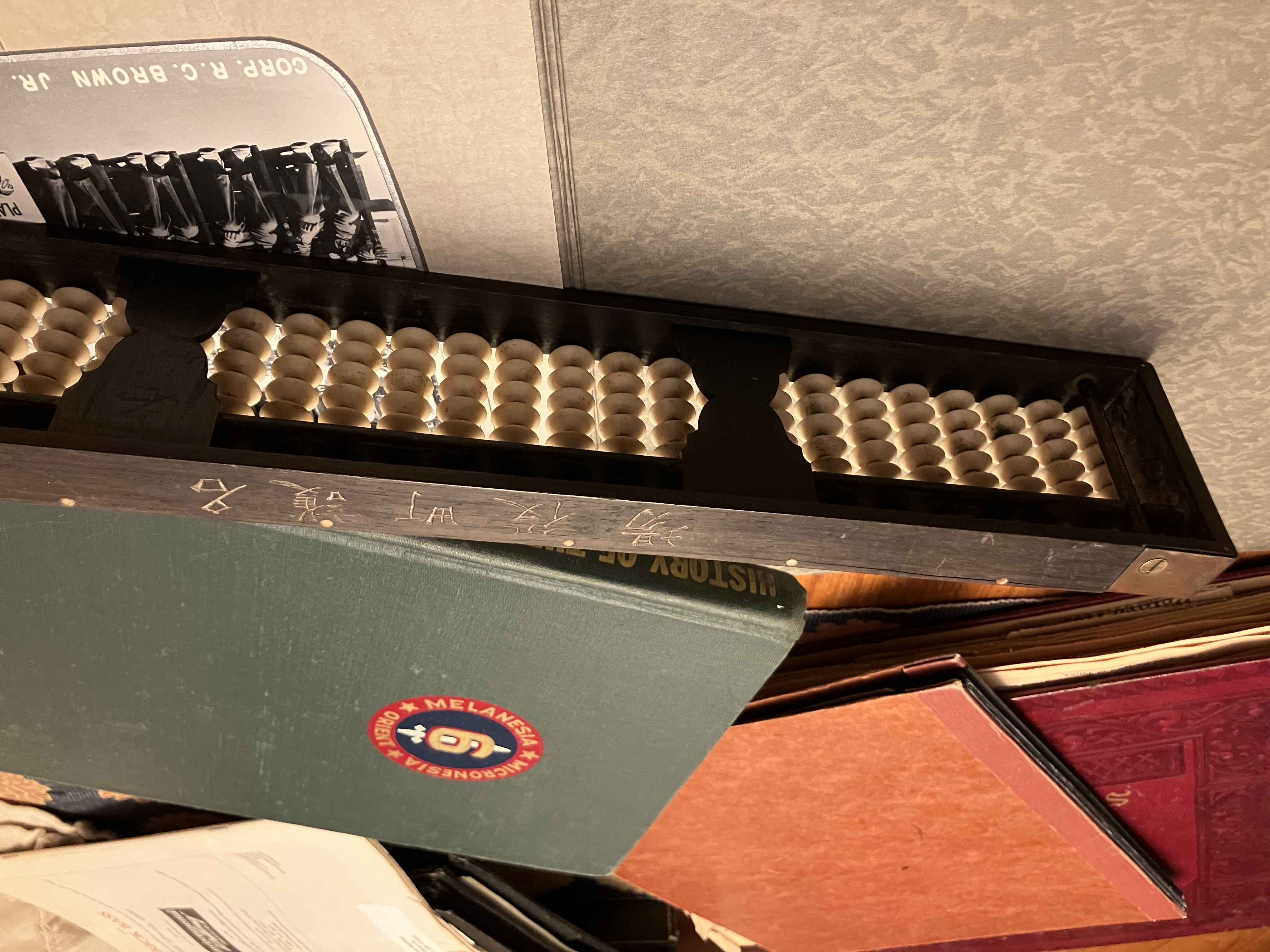
Sammler herself had a relative who fought in the Battle of Okinawa; her great uncle, Tadashi Sato. He was in the navy, and died on the island at 22 years old. Beyond that, Sammler knew very little about him, which illustrates how lucky my family is that my great-grandpa survived the war. Otherwise, he could have become lost to history like Sato was.
xxx
Before the war my great–grandfather went to church, as did most people in that era. When he came back however, he became intensely devout protestant. My grandmother and mother both believe that this strong faith came from his experiences in the war.
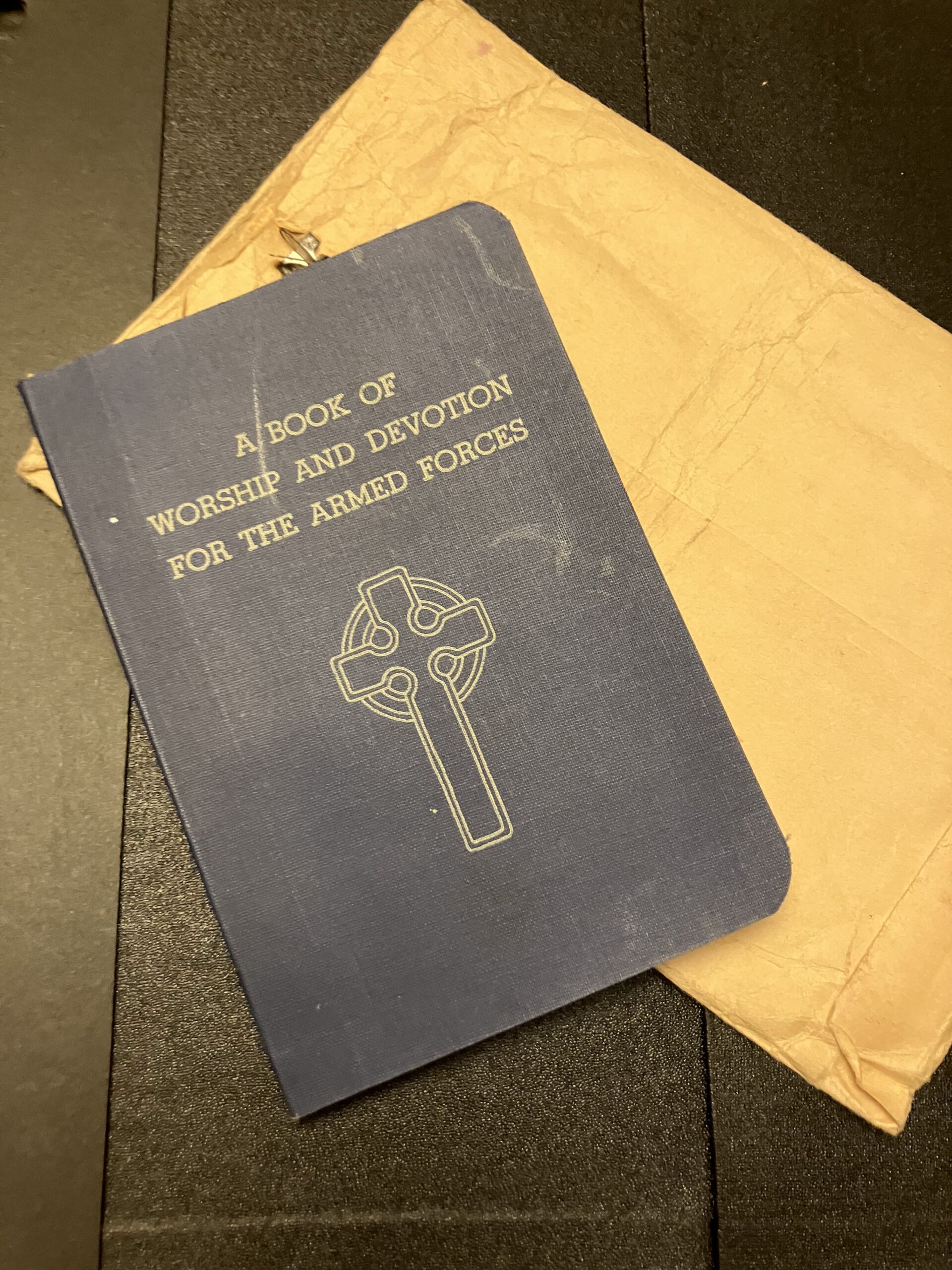
“I think the things he saw and experienced really shook him, and so when he came back, that plus my grandmother’s tendency towards conservatism led him toward a certain life where he was pretty strict and religious,” my mom said. “It was just a way of coping with the psychological strain of what he had been through.”
After Signe died of complications from a stroke at 62, Clarence became much less observant and stopped going to church, although my mom told me he still loved to sing hymns. “She was his rock,” my grandma said. After her death, his attitudes toward both politics and religion became more relaxed and liberal.
“It was pretty intense the way she died, and she was only 62,” my mom said. “He probably lost a lot of faith in God after seeing her suffer.”
Clarence was a contradiction to the idea that older generations are stuck in their ways when it comes to social and political issues. Originally a Republican, he became a Democrat later in life. By the time my mom knew him he was quite left-wing, with a burning hatred of Republicans like Ronald Reagan.
“He liked to talk about politics,” my mom said. “He was never boring. When I was in my 20s, I didn’t know a lot of other people who had a grandparent that they wanted to hang out with. I mean, I would drive up from Eugene to Salem where he was living at the time, just to see him.”
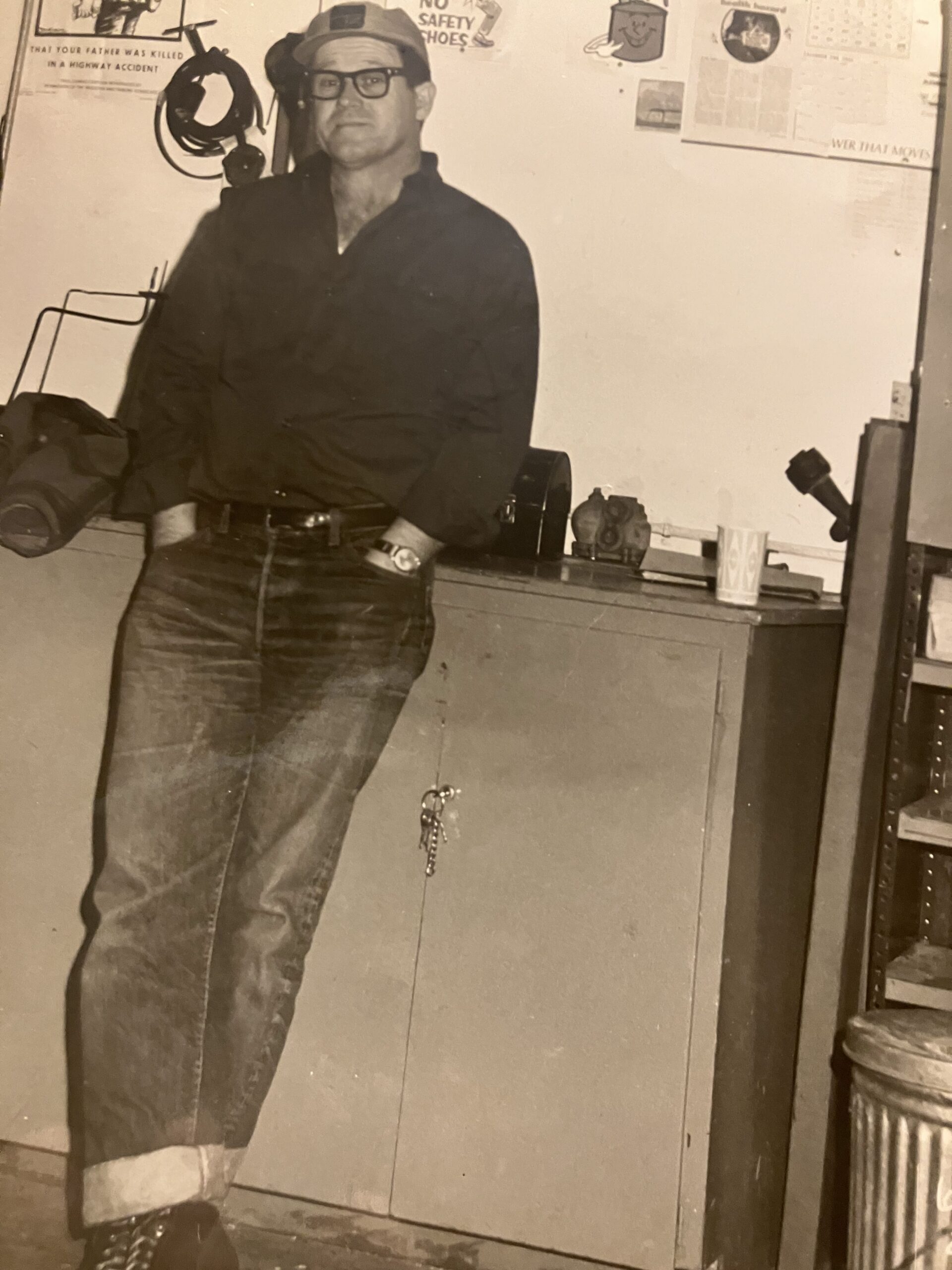
Clarence died on April 3, 2003 at the age of 84. He had struggled with rheumatoid arthritis for much of his life, and suffered from constant chronic pain. “He was diagnosed with rheumatoid arthritis when he was 39 years old. He became so crippled that he couldn’t even drive a car,” my grandma said. “I never once heard him whine or complain about it. He never missed a day of work.” The arthritis eventually eventually affected his heart, and he died of heart failure. My mom wrote his obituary in the Roseburg News Review.
“His family will always remember his sharp mind, skills as a storyteller, ability to recite Finnish maxims and never–ending sense of humor,” my mom wrote. “Anyone who met Clarence could not help but be captivated by him.”
xxx
Clarence’s uniform smelled like mothballs when I put it on. It was in pristine condition, made of stiff, thick wool with intricate metal buttons. The jacket, hat and pants fit perfectly. My grandma, beaming, had me salute awkwardly for her photos. Afterwards, I went to look at myself in the mirror, expecting to see some part of my great grandpa staring back at me. After all, I had pictures of him in the exact same clothes. But all I saw was myself in a marine uniform.
xxx
In 1975, Okinawa Heiwa Kinen Koen (Okinawa Peace Memorial Park) was established on the island. The monument consists of rows of granite slabs designed to mimic waves, inscribed with the names of over 200,000 dead of different nationalities. New names are continually being added, as casualties are still being identified. It’s located near the Pacific Ocean, next to “Suicide Cliffs,” named for the Okinawan civilians who jumped to their deaths there.
I don’t know if my great–grandpa knew about the memorial, or what he thought of it. I think he would like the idea, however. What I admire most about him is how he saw through the glamorization of WWII, and the division it caused.
“That’s pretty vivid in my memory today, what I did there,” he said on the tape. “It’s hard and dirty and it’s evil. War is terrible.”

