

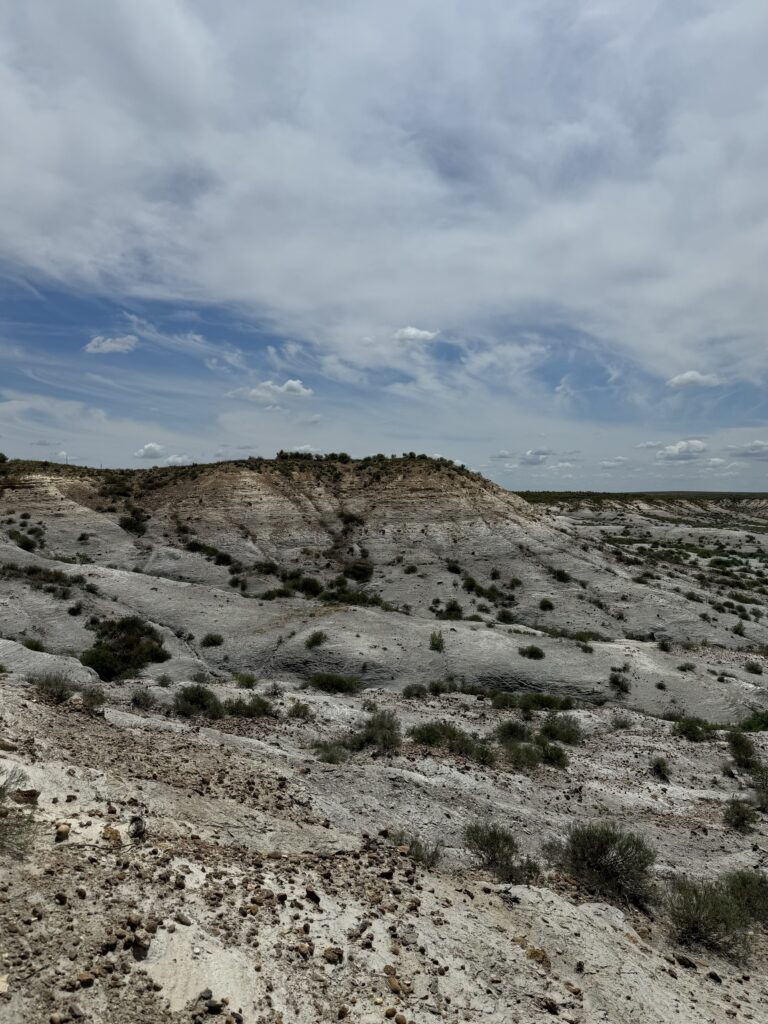
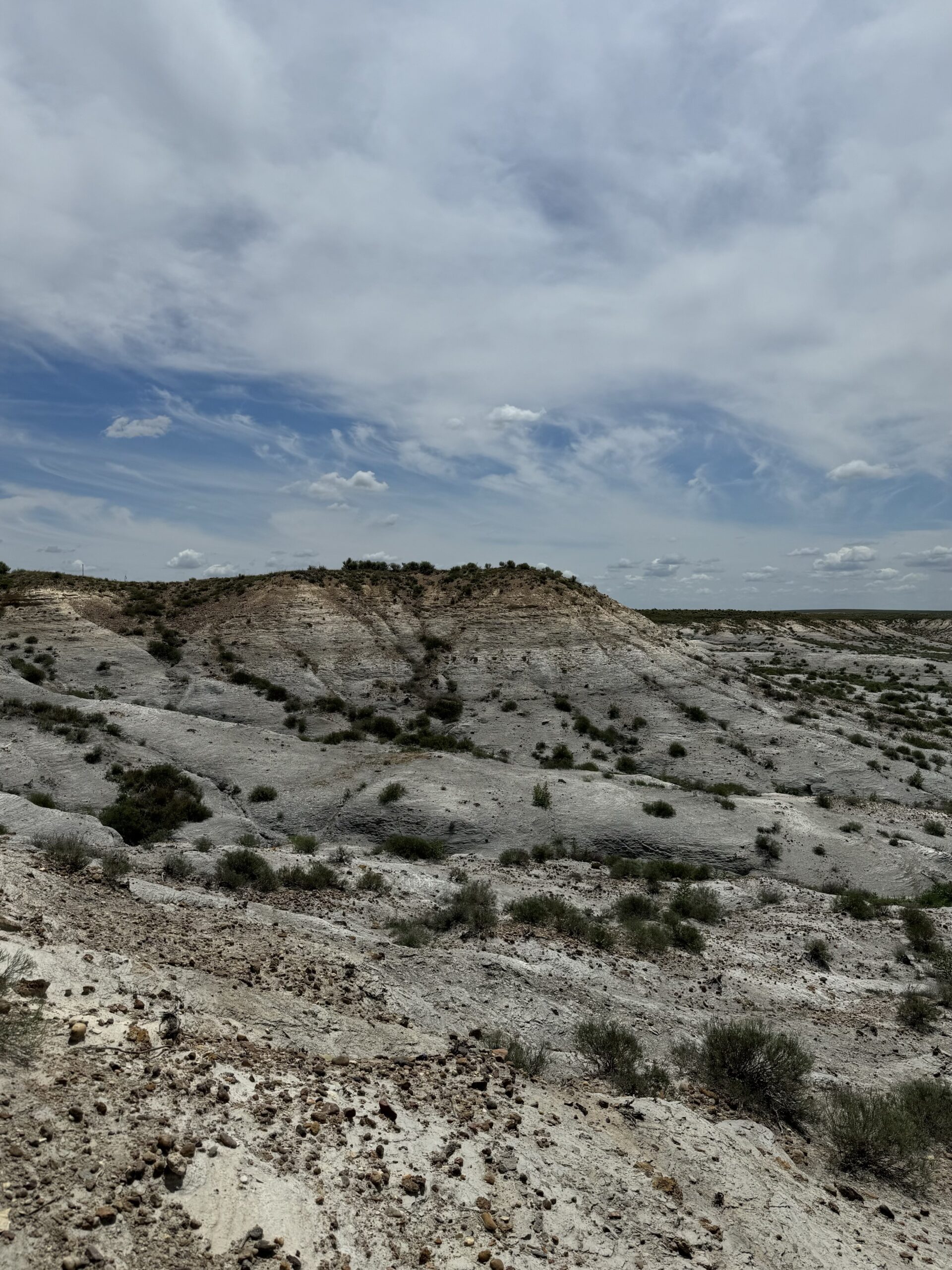
This small collection of poems explores the concept of Deep Time, and how we can view stratigraphy, or the layers of the Earth, as a historical document of both humanity and geologic history. Many of the pieces were written after spending time outdoors, in places like the 85-ish million year old Niobrara chalk formation in Kansas, which used to be the Western Interior Seaway. I was interested in exploring how life, both human and otherwise, is deeply connected across time and space, and how we can use principles of historiography to understand the preservation of past and future eras. In addition, I attempted to center the lives of historic women in several of the poems, such as the medieval polymath St Hildegard of Bingen, and the Merovingian queen Clotilde. Beowulf – the sequel was written in response to Maria Dahvana Headley’s iconic modern translation of the ancient poem. 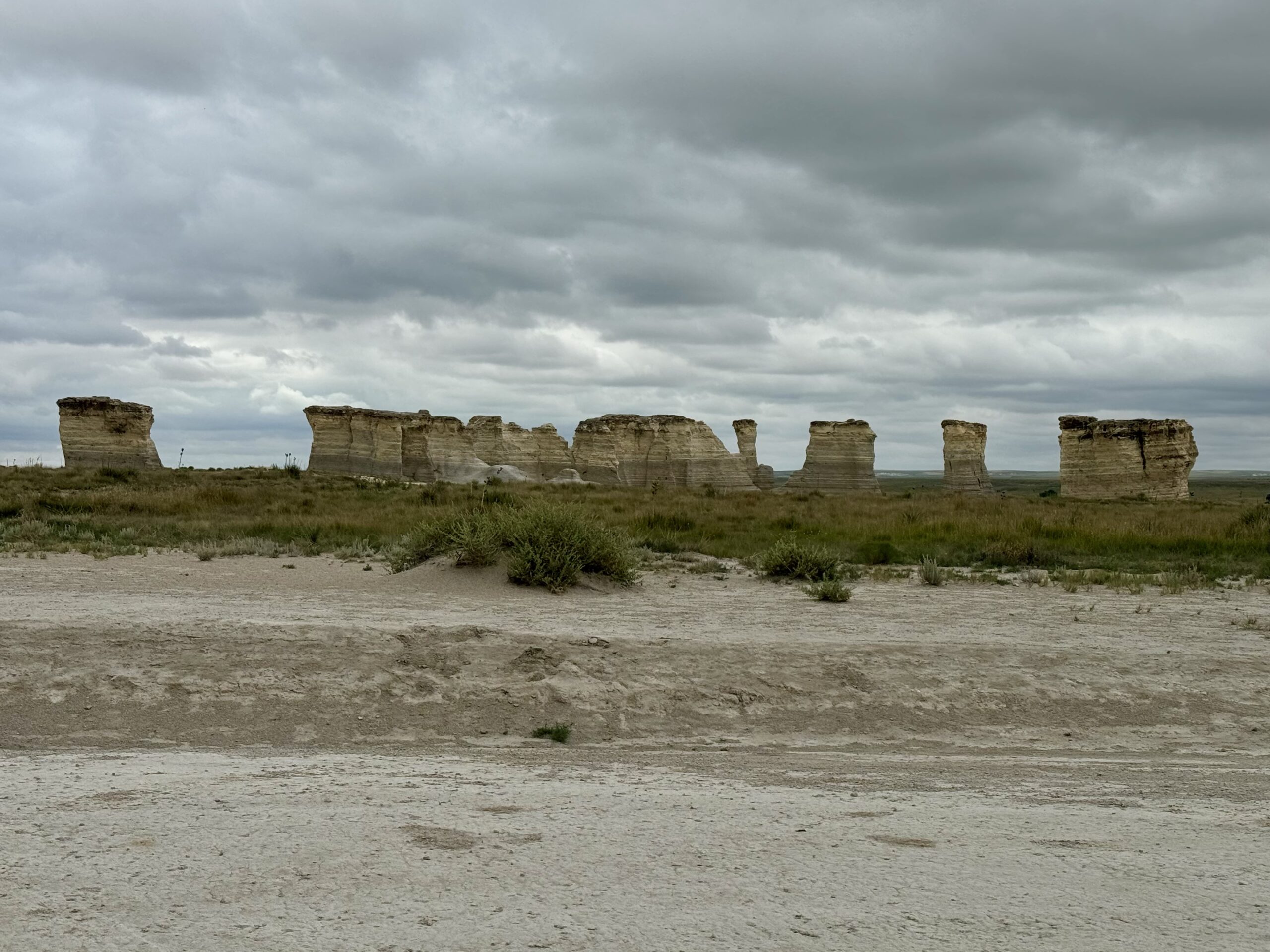
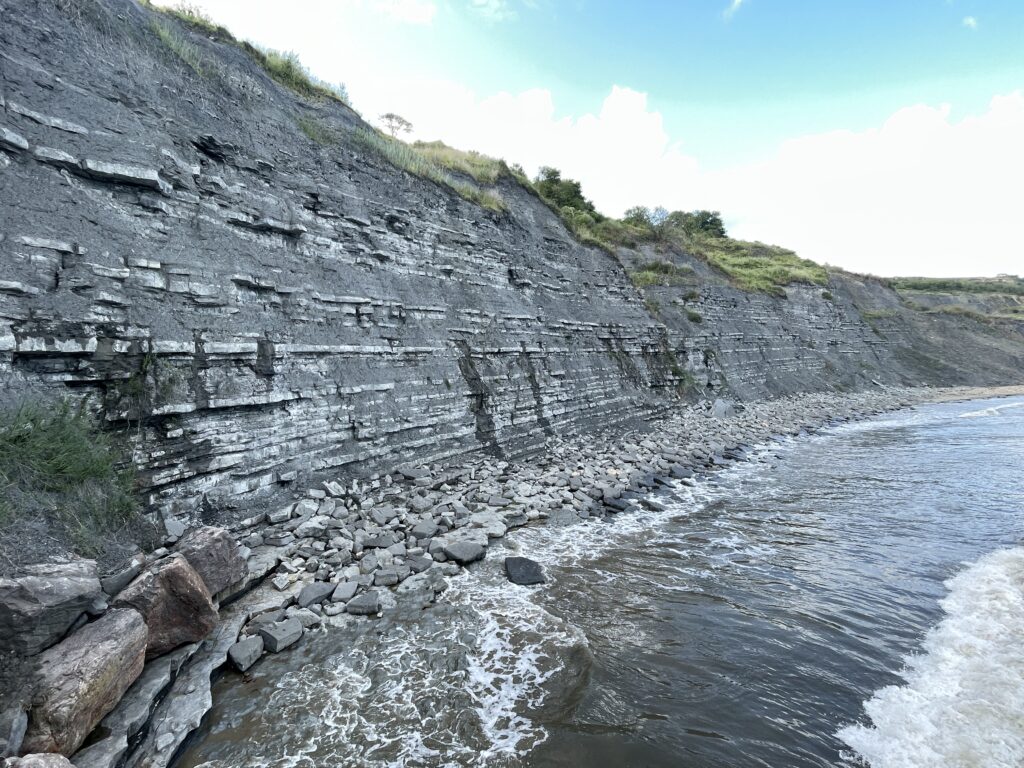
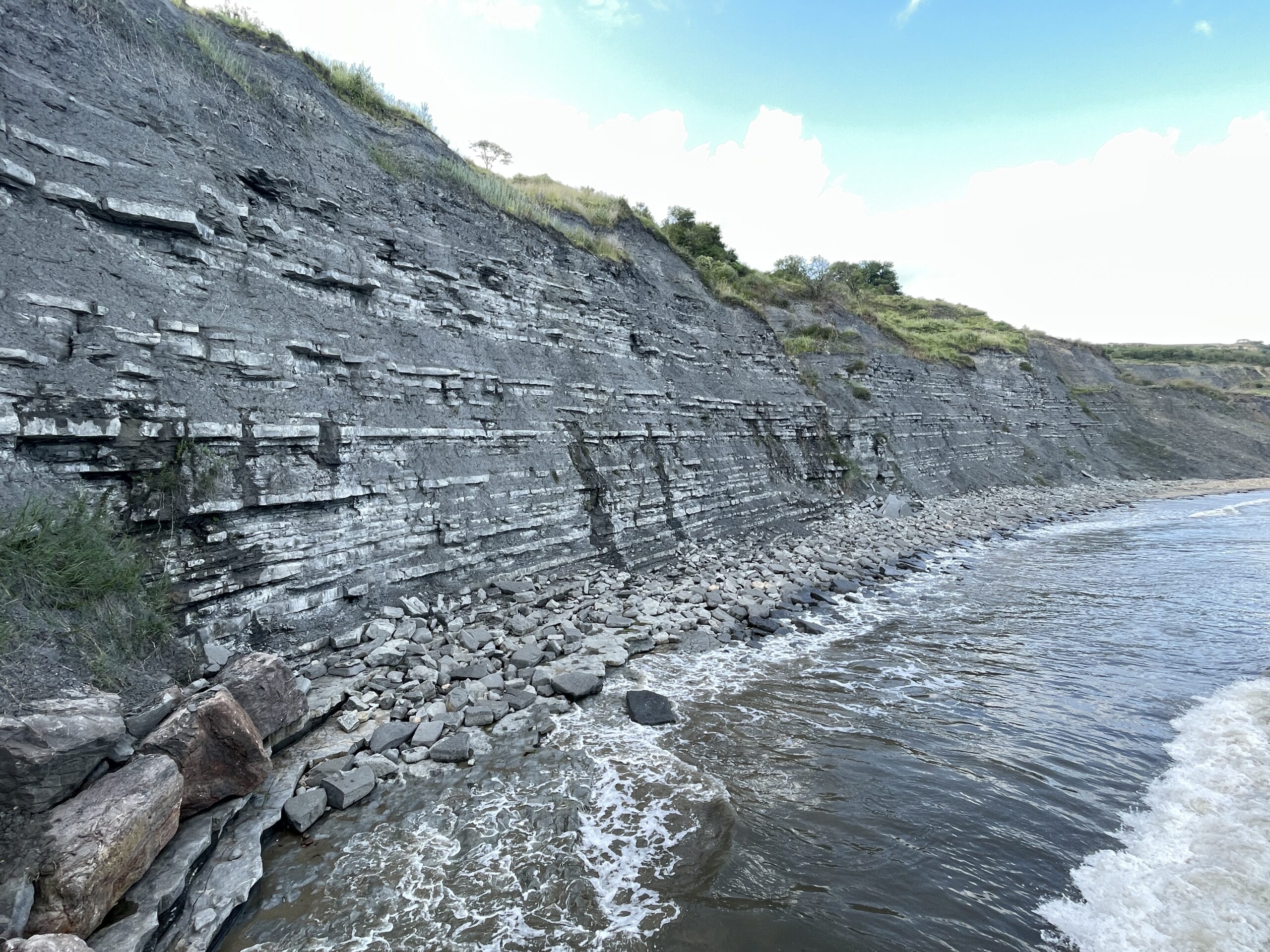
Stratigraphy
I walk the floor of a shallow sea
in late June, to see the diving monsters,
the fish within a fish. With no map
or compass, we found our sweet corner
of water-carved country somewhere
past the pressed seam of highway parting
corn fields from wheat, wheat from cotton.
Out on the chalk, my fingernails taste
the matrix, fine-grained as mealy flour. We climb
upwards into crust of sagebrush, slipping
on loose alluvium with a make-shift elegance
cobbled from metallic water and days without walls.
Hammers strike, another layer is uncovered,
and when the first pieces of bone are pried from
unyielding earth, we learn to compose the narrative
of water and dirt. If I were George Sternberg,
I would take the time with plaster and brush, decipher
twisted vertebrae from scapula or sacrum, but our time
is fleeting, and I am not yet fluent in the language of burial.
I am beginning to learn the letters, scratched into dusty
crevices, a calligraphy written on parched vellum
in the Book of Days, left out to dry under the midday
midwestern sun. Thirty million years pressed
into one outcrop is enough to wonder what our thin furrow
of strata will look like, who will dig into the chalk,
making ossuaries of pockets and collecting bags.
 The Magistra
I dreamed of light
and an egg I held
in parted palms; it did not crack,
but carried in its water
the revolutions of planets. I woke
to an animal scratching
at the door and my sisters
singing. I’ve dressed them
in silk and filigree coronets,
they orbit the quire like moths
to a holy flame. Last night, rain
dug wells below our windows
and from this hilltop sanctuary
the Rhine is a heavy length
of floss unspooled. I stand
at the edge of muddied fields,
put words to the greening of spelt
and yarrow. In the eastern hall,
narrow beds are filling. I hold
tired faces in cupped hands:
laborers, unwed mothers, my
sweet sisters. In each fruitful year,
I’ve held the pattern: health, sickness,
other growing things. On parchment
I’ve traced vice and vigor, the symmetry
in seeds sprouting from plowed earth.
That night, I spoke of an egg.
Now, my teeth are stained with lapis
and crushed cinnabar. The wheel turns.
Now, I am a cradle of white stone,
a fingerprint on the moon.
 Modern Katabasis
Press a palm
to the red ochre outline.
When darkness squashes
the articulated agency
of mammal language,
feel the artist
pushing back.
Sole to sole,
reach out:
for the calcified skull,
the brittle twist of hair.
Meet openhanded
through sediment,
descend
into the slow-flowing
tides of the underworld.
Metal rungs, cold wash
of headlamp light –
mineral bodies echo
the creatureliness
of excavation:
reefs of teeth,
stalagmite spines.
What is instinct,
but the need
for our lonely species
to entrust the clandestine
limestone with remnants
of memory and matter,
so we can crawl out
of tenuous fault-lines
and lie under a glut
of star salted sky.
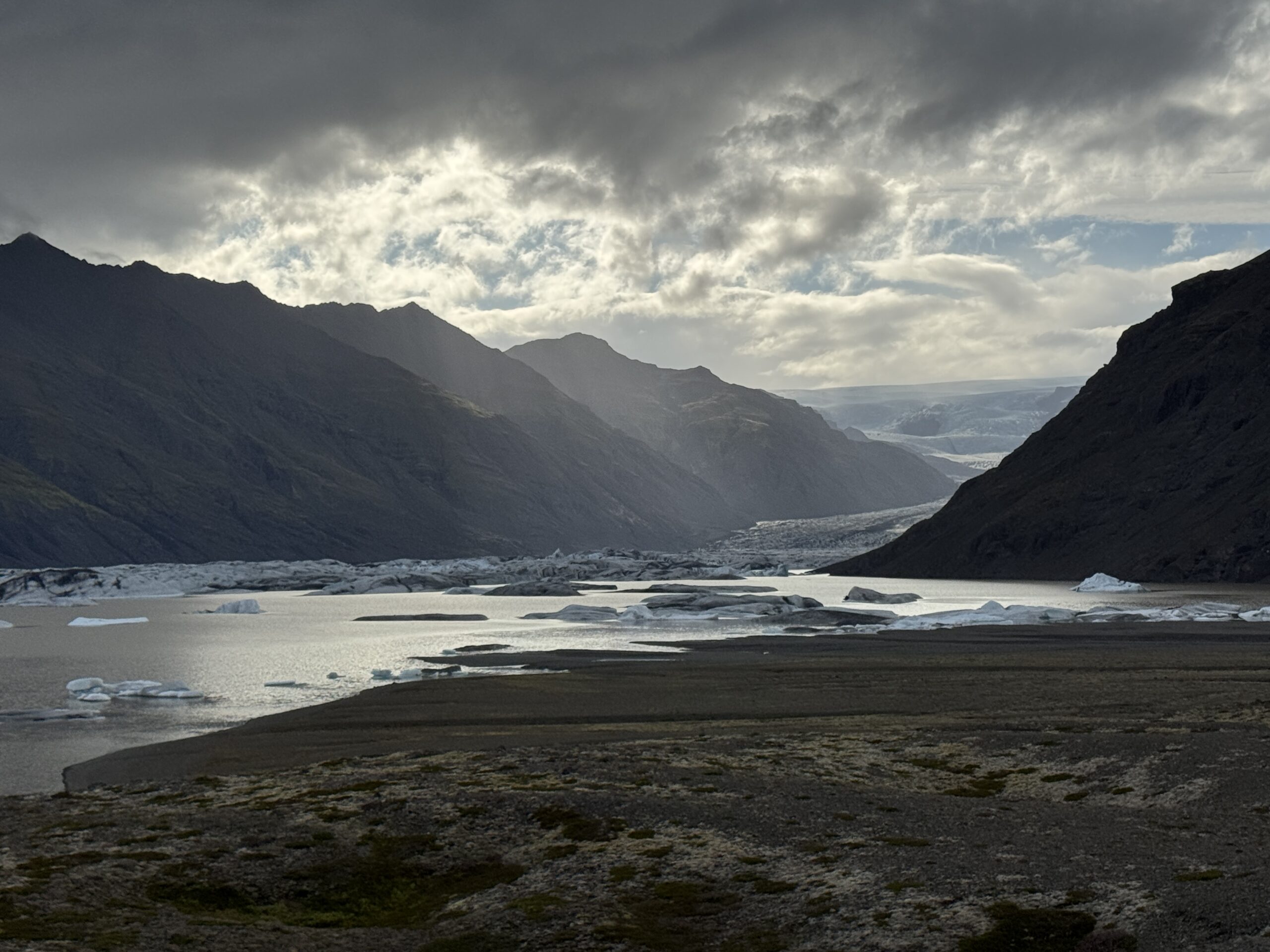
 Snaefellsjökull
We climbed across the skin
of a dying god
and tasted at the summit
from its opened veins.
A funeral procession
in crampons, we peeled
wool coats from sweating
skin minutes after stepping
onto the snow. Scalps
began to burn beneath
midnight sun, beneath
the candle weeping hot wax
onto lapis pillars and azure
bastions of breathing ice.
We moved on –
trolls and pumice giants
rising out of wide palls
of fog, standing sentry
over our muted parade.
We moved on –
rope threaded between us,
between each fledgling body,
guiding our carefully charted
ascension.
But this was a solitary task.
To hear the water, as it ran
in the basin of fissure or crevasse,
necrotic wounds that threatened
each clumsy footfall. The water,
and the quickening of tephra
into slopes of oozing mud.
 Beowulf – the sequel
Now, this was before the age of Bede
when, like mediocre mead, stories flowed
from goblet to greedy gullet. Bro –
The halls were full that night,
laughter and rowdy revelry banishing
the shadows stalking at the door.
No more would the darkness be the demon’s
domain when merry-making was in Heorot.
The hostess glided like a wraith
between benches and barstools,
gold glinting in the glow of torchlight.
Carrying the ewer was Wealhtheow,
Canny Queen, wedded to the Halfdane,
but don’t forget she was a Wulfing first,
her bride-price the promise of goodwill
between tribes. For she was the peace-weaver
and her loom the word-horde that kept the
ashen hills from running with the blood
of her people.
But alas.
Hrothgar the Scylding; king, kinsman, warrior –
Was wedded to the whetted blade too, and it was he
who watched the Franks and Frisians with a bloodlust
as entrails were spilt upon the fertile fields
and rich peat across the water.
The Merovingians, they didn’t hold back.
When Hlōdowig touched Danish soil
there was no choice but to answer the call.
These were the men who slayed Hygelac –
This was the man who tasted from the drinking skull
still bearing the memory of the Geatish king
who fell at a Frankish sword.
So. Laughter wasn’t long lived in Heorot
when word of warriors arrived at the hall door.
Hrothgar gathered to him two hundred fists
promising them a glory-bound fate – in this life or the next,
God only knows. Draped in mail from head to foot,
gathering to them arms passed from forefather to son,
shining unearthly metal, mythic blades that had
feasted on flesh like untamed wolves and still rang
with the sweet song of battle. They could taste it in the air,
these browbeaten brothers.
Bro, the Danes faced a fearsome foe, no mere nuisance-makers.
Hlōdowig the pagan king, golden plaits ran like rivers down his back,
baptized by his wife’s wishes, though herself a foreigner in his kingdom.
This man had begun as a half-pint heir, unschooled,
fathered by an exile and a mistress, there was no honor in bloodline.
But a youth spent with one eye open, challenging
any rivals who dared dispute the prince’s prowess,
placing poison in the plates of his enemies,
had earned him comrades and companions.
Proof enough, here was a king.
I say, here was a king! He had come for a crown.
Across the whale-wandered road
another weary wife knew her place and saw it clearly.
This was Clotilde; waiting, watching and watchful,
as much a queen as winter is long and
stone is old. A woman who looked to God for some
sign her sons had not fallen renounced by fate.
She who had saved the pagan king, brought
with her bishops and holy books
from a forsaken homeland.
She wasn’t one to look backwards.
God loving; loved by God Clotilde would be
buried in a bed of gold combs and cabochons at
the feet of Saint Genevieve: this was a good queen.
When the day had come, the sky-candle weeping wax,
over yawning hills and broken barrows
Wealhtheow went to her sons – Hreðric and Hroðmund
dressed for dancing in the battlefields,
who stood among chieftains and soldiers alike. She
offered prized pieces from the horde: seaxes and sheaths
and spell-bound torcs, sacred heirlooms from times past.
But her heart was heavy, for beneath a hallowed helm
Hrothgar was graying and galled from years
of torment and torture, tired at the hands of Grendel,
monster, hellish heathen sent back to the mere
by a man worthy of the great tale-spinners, who had
bathed in the blood of beasts. There was no time
to call for the Geats aid, a warrior occupied
in his own ravaged kingdom – It was the Danes fight to finish,
God willing.
The Merovingians didn’t hold back.
Swarming like bees across the fen, unfaltering
in a shield wall unmatched in living memory.
The spear-Danes waited at the hills crest.
At a somber high table, Clotilde clasped hands
and looked to the south, brooding clouds
portents of perilous proceedings.
Far from fault-lines, Wealhtheow looked to the Heavens
and saw a history carved in blood and bone
a darkness fast approaching, no horns sounded
as the armored armies scraped skulls,
offal left unburied and broken bone-houses
scattered like leaves in the mire.
Fate was absentminded that day.

